
Exercise is one of the more visible parts of pet care, but it is also one of the easiest to lose track of over time. A busy week with shorter walks does not feel dramatic day to day. It is only when you look back over a week or a month that a real drop, or a real improvement, becomes obvious.
Activity also connects to more than fitness. It affects weight, joint health, and, for many dogs in particular, mood and behavior at home.
Why activity is worth tracking, not just doing
Regular exercise helps manage weight, supports joint health, and keeps the heart and lungs working well, all of which matters more as a pet ages. What tracking adds is the ability to notice change. A pet that is normally active and starts seeming reluctant to walk, play, or keep up can be showing an early sign of pain or illness. This matters most when the shift is sudden, rather than an expected, gradual slowdown with age.
There is also a behavior connection worth knowing about. Under-exercised dogs often show it indirectly, through restlessness, destructive habits, or trouble settling down, since activity is one of the main outlets for both physical energy and mental stimulation. A consistent routine is one of the simpler ways to support calmer behavior at home.
How much activity is typical
There is no single right number. Many adult dogs do well with somewhere between 30 and 60 minutes of active exercise a day. High-energy working breeds often want more, while puppies, seniors, and dogs managing a joint or heart condition usually need less, and less intensity. A daily target is best treated as a starting point you adjust for your own pet, ideally with input from your vet, rather than a fixed rule.
Logging activity in PetNid
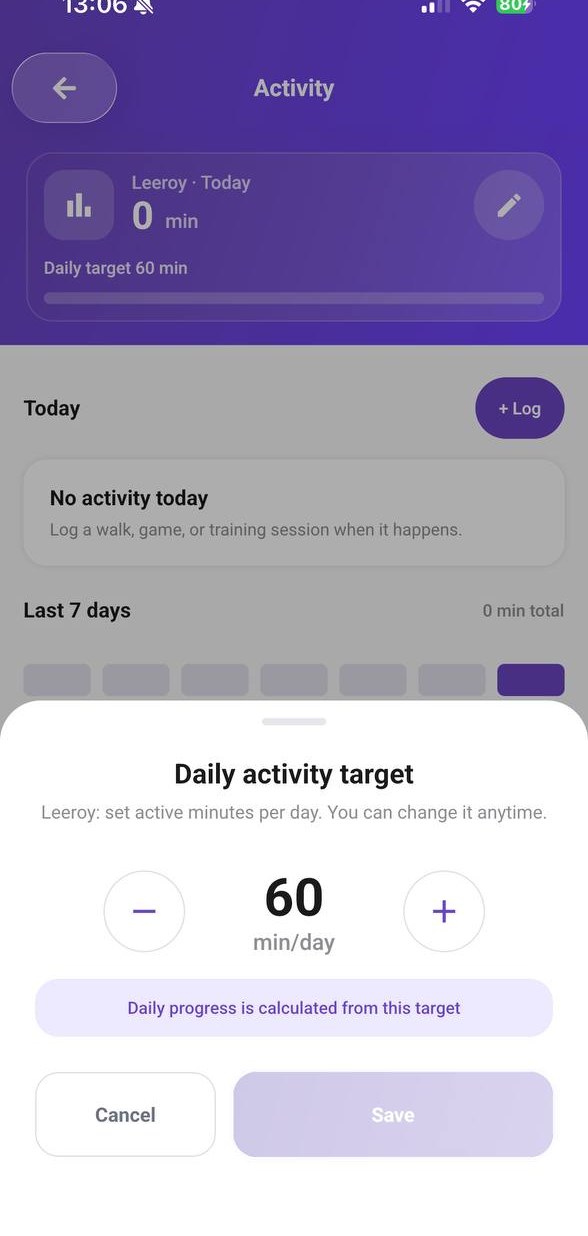
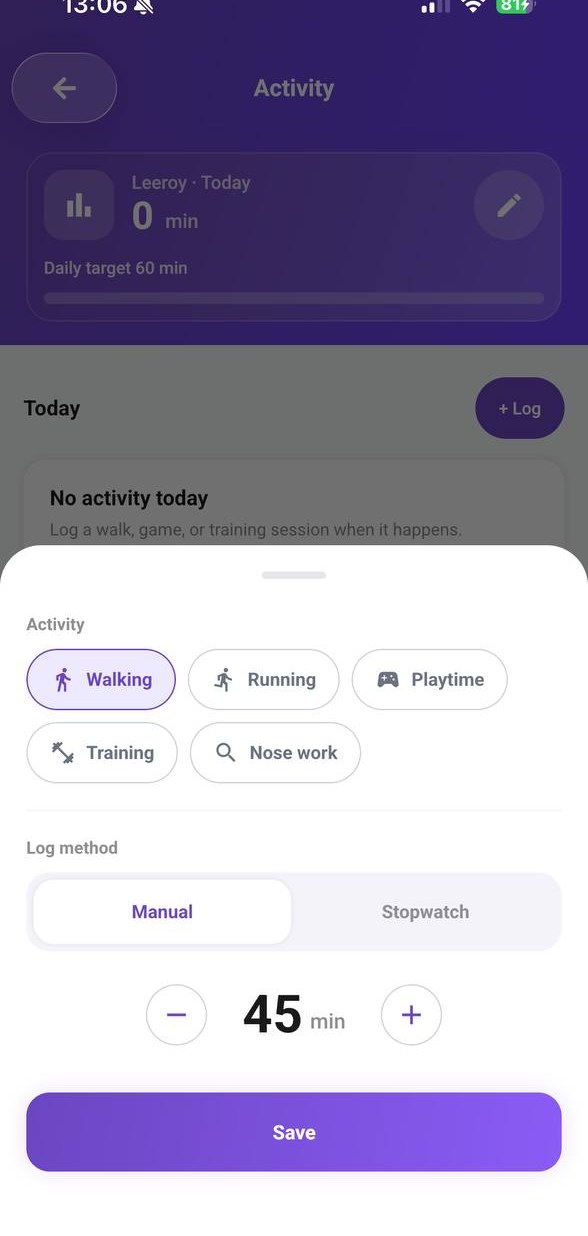
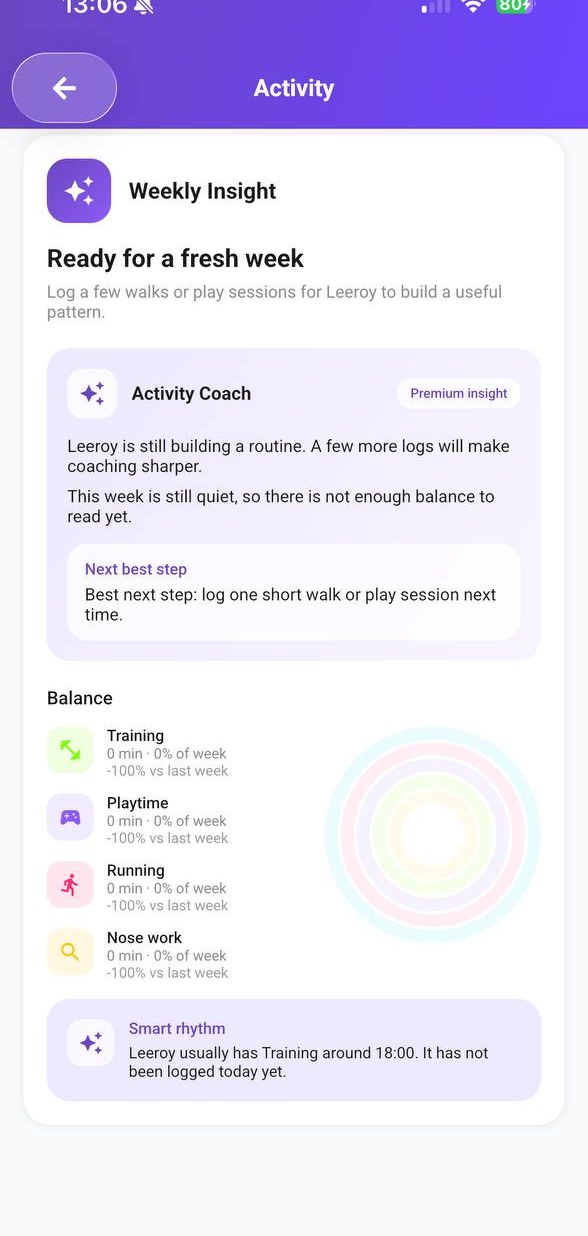
PetNid keeps a running log of walks, play, and training, turns it into a 7-day pattern, and highlights when something is worth a second look.
Reading a drop in activity
A single quiet day rarely means anything on its own. What is worth paying attention to is a pattern. A full week noticeably below the usual average, or a routine activity like an evening walk that stops happening without an obvious reason, is worth a closer look. That is the kind of change worth mentioning at your next vet visit, alongside anything else you have noticed in mood, appetite, or energy.
- Log walks, play, training, and nose work, manually or with a stopwatch
- See a 7-day pattern instead of judging activity by a single day
- Set and adjust a daily target as your pet's routine changes
- Balance and Smart rhythm highlight when a usual routine has slipped
- Set a daily target that fits your pet's breed, age, and health
- Log sessions as they happen rather than trying to estimate later
- Look at the week's pattern, not just a single quiet day
- Notice both a sudden drop and a gradual, ongoing decline
- Mention a real change in activity to your vet alongside other symptoms
A drop in activity is often easier to explain alongside other changes. The symptom diary guide covers how to log energy, mood, and other day-to-day changes alongside it.
Start building a clearer activity pattern
Log walks and play, set a target, and see the week at a glance.